Analysis
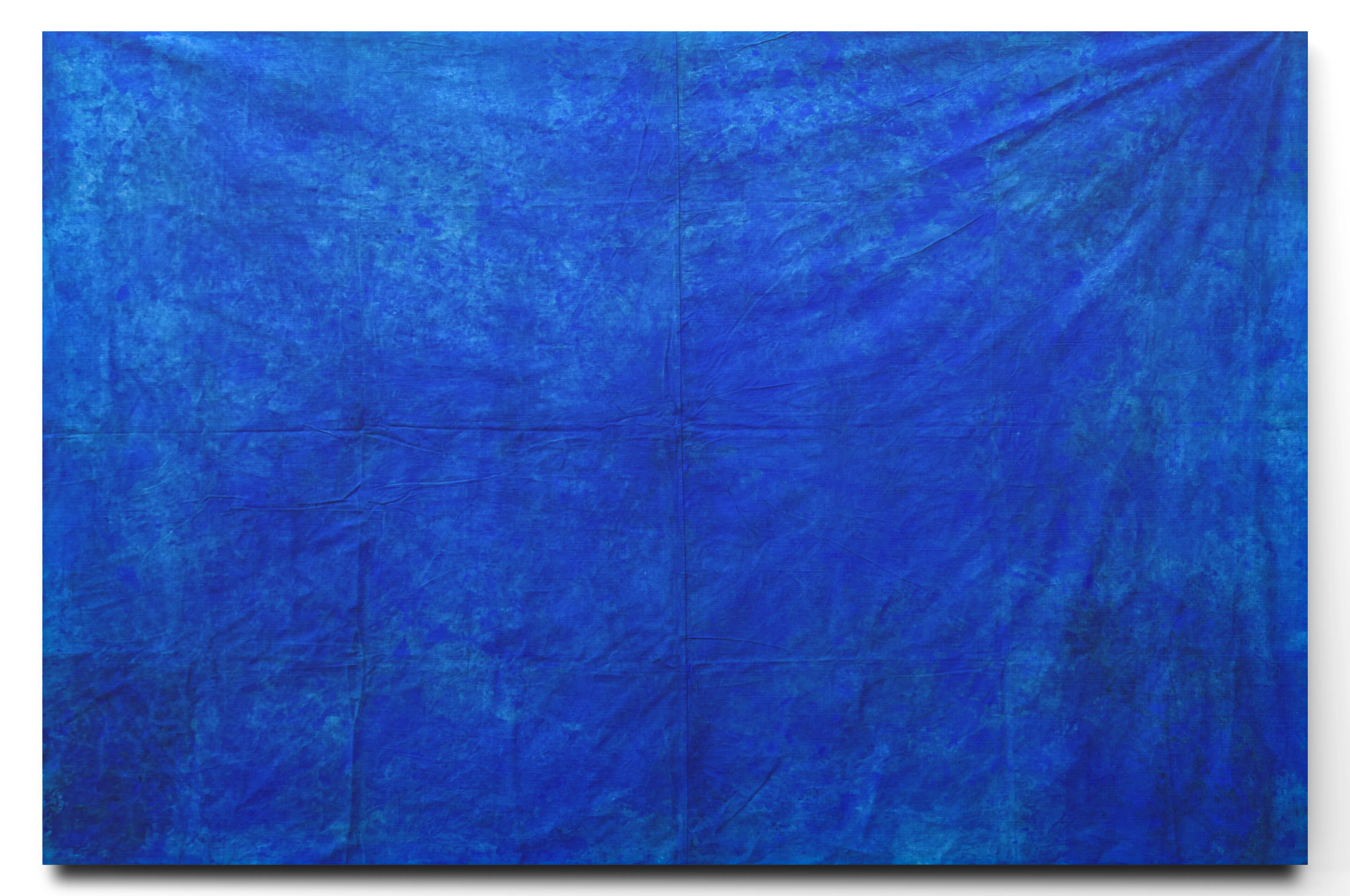
The strongest way to read Road is as a painting of aftermath. Not aftermath in the dramatic sense of wreckage or event, but in the subtler sense of an image that has already undergone intensity and now remains as memory trace. This is why the pale blue-grey field is so important. It does not simply "set a mood." It establishes the work's relation to time. The painting feels belated, and that belatedness is its subject.
Formally, the work is built on a delicate balance between exposure and retention. Much has been removed from the surface, or seems to have been drained from it, but not to the point of vacancy. Dark marks, scratches, thin interruptions, and submerged tonal shifts keep the field active. The eye continues to discover local incidents, a faint lateral sweep, a darker suspended blot, a scored linear passage, an area where the grey cools further into distance, yet no one zone insists on primacy. The painting is held by dispersal.
This dispersal is what makes the work historically serious. Many paintings that seek openness simply become indecisive. Road does not. Its openness is structured. The field is thin, but not fragile. One senses a rigor beneath the apparent atmospheric looseness, as if the image had been measured carefully enough that it could afford to appear relaxed. That is one of Bloom's strongest pictorial gifts: the ability to let the surface breathe without sacrificing formal command.
The painting's relation to the road is therefore indirect but exact. Nothing in the image resembles a literal roadway, yet the feeling of forward passage remains. It is carried in the lateral drift, the thinning spread of marks, the sense of one long surface extending past any single moment of emphasis. The work behaves like remembered motion, not the thrill of speed itself, but the cooler state that follows, when the body has stopped and the mind continues traveling.
Its blue-grey tonality is essential to this effect. Unlike the hotter fields of pink and red, or the denser nocturnal blacks, the color here produces a cooler, more terminal kind of atmosphere. Blue is present, but subdued into weather; grey is present, but never dead. Together they create a register that feels both American and withdrawn, the chromatic equivalent of glare fading off pavement or light draining from a late summer horizon. The painting earns its melancholy by staying formal.
There is also a subtle intelligence in the way darker marks are suspended inside the field. They do not structure the image as armature in the forceful way black does in the earlier abstractions. Instead they remain as partial interruptions, enough to keep the painting from dissolving into pure wash, but never enough to pin it down. This gives the work its peculiar authority. It feels organized by what has receded rather than by what still insists.
As an object, Road has a calm and severe dignity. It does not dominate through aggression or chromatic heat. It holds the room by quiet persistence. The horizontal scale allows the field to become enveloping without becoming theatrical. One lives with it the way one lives with weather or memory: not as a single statement, but as an ambient condition that keeps returning to consciousness.
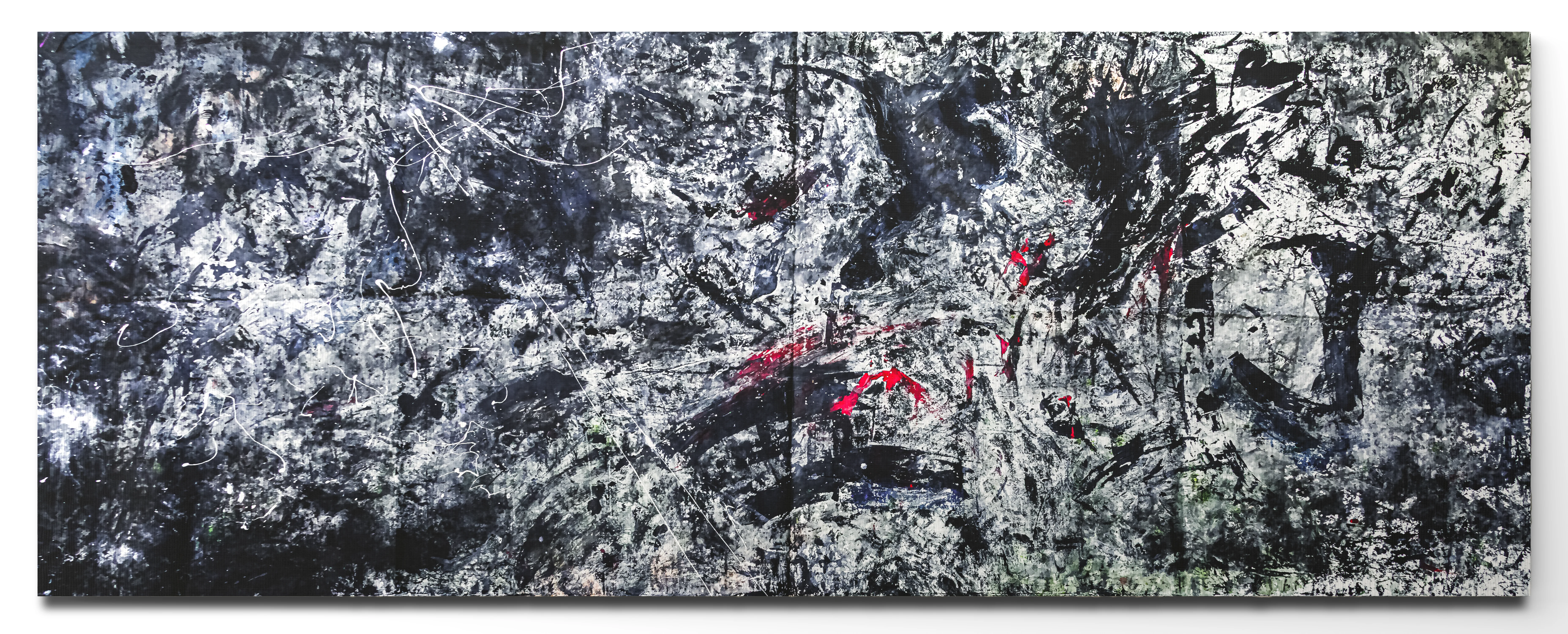
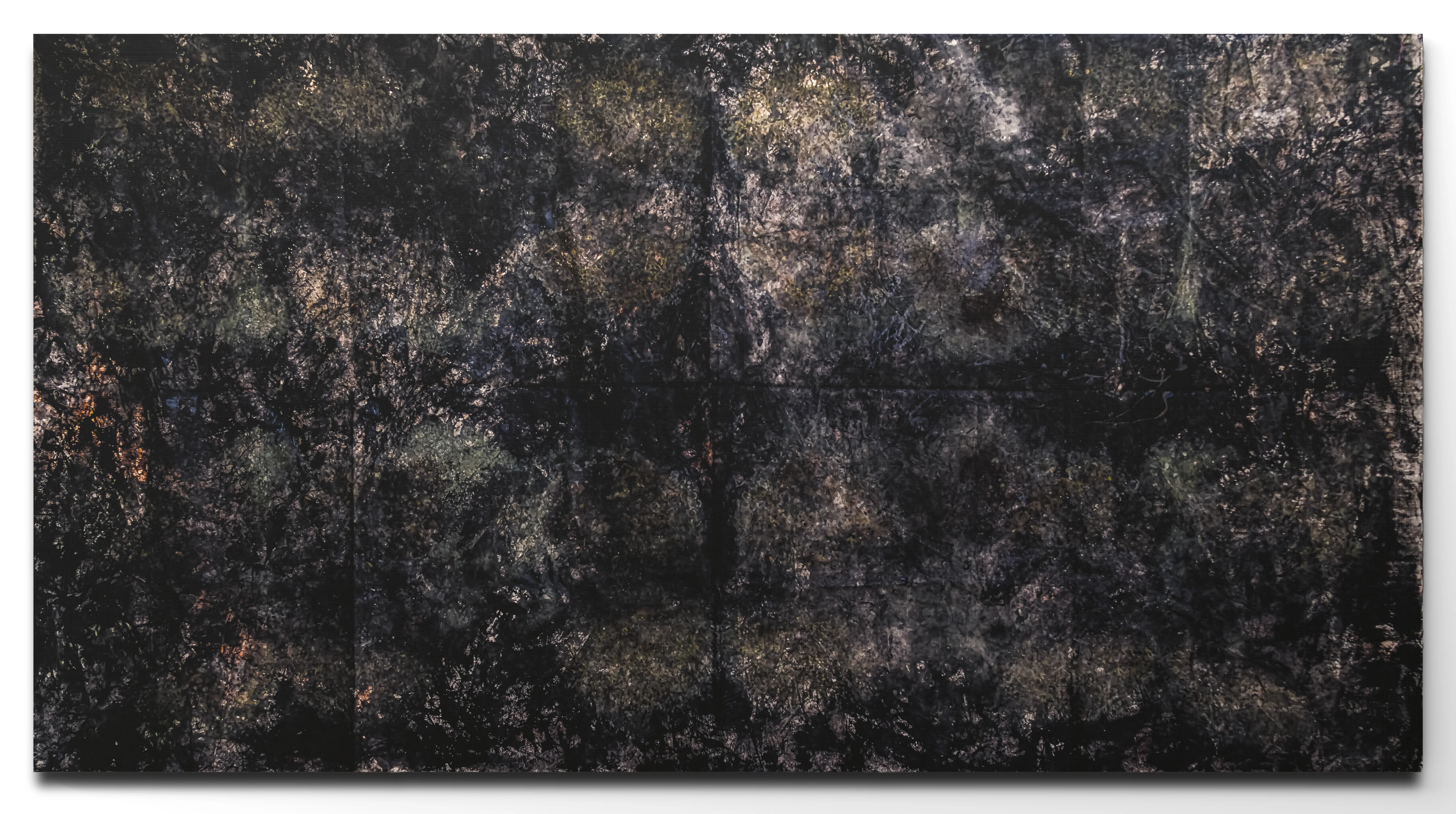
In the larger Ian Bloom record, Road is indispensable because it completes the road cycle from another angle. If the darker, harsher works in that group make the road feel struck, burned, nocturnal, or blackened, this one gives the road back as a pale afterimage. That matters. A canon built only on force would eventually become predictable. Road proves that Bloom understands the other side of force: the point at which intensity leaves the surface and what remains must still hold.