Analysis
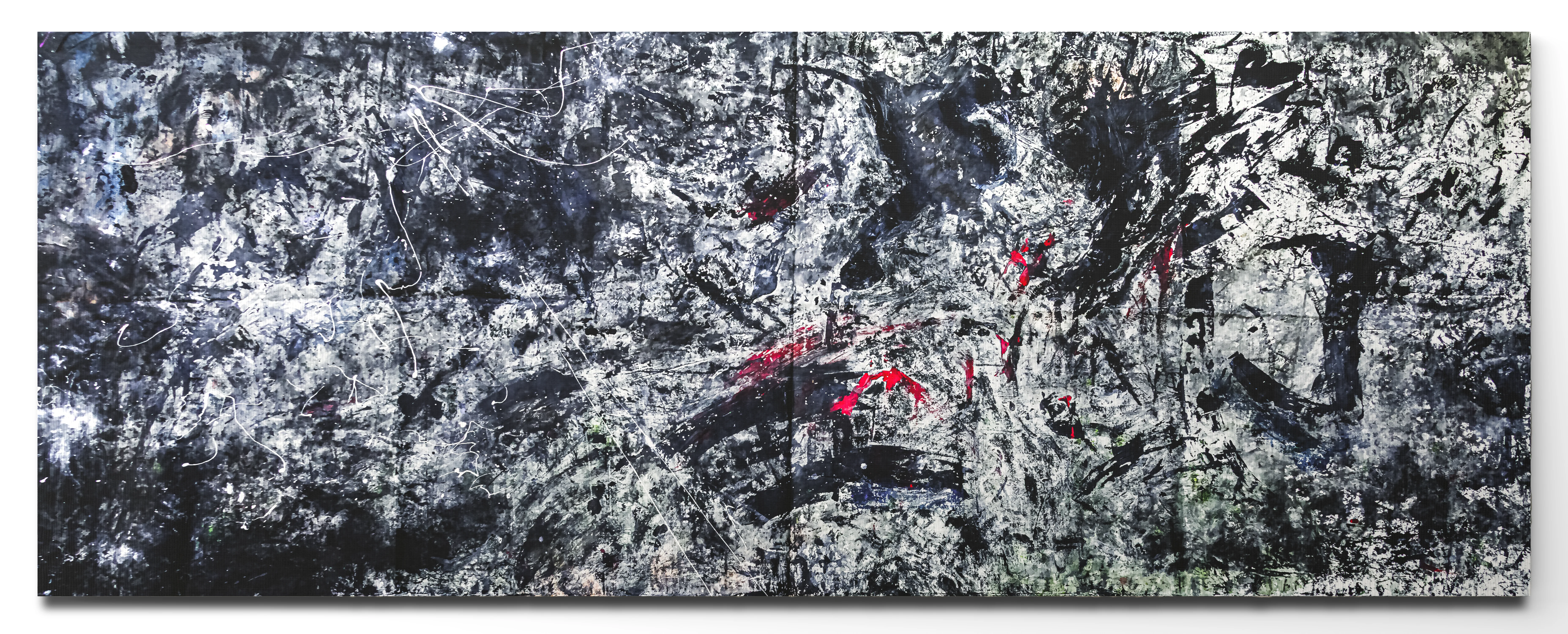
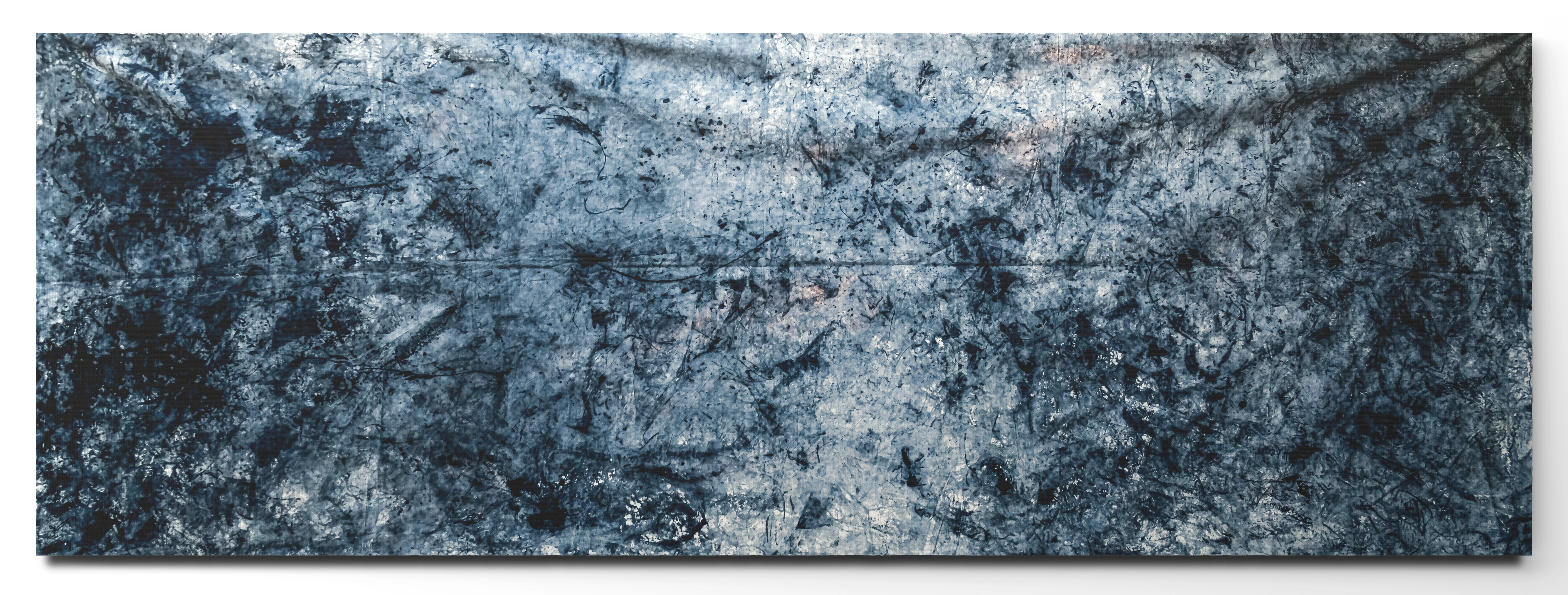
The strongest way to read Road No. 3 is as a painting of retained light. Nothing in the work is theatrical enough to be called illumination, yet the image keeps breathing through tiny tonal pressures, metallic bruises, and buried shifts in value. This is one of the reasons the painting is so strong. It does not dramatize the encounter between dark and light. It internalizes it. The field appears to have absorbed illumination and held it under pressure.
Formally, the work is built from density rather than gesture. Gesture is present, but submerged. One sees traces of drag, sweep, and abrasion, yet these have been worked back into the body of the surface until they no longer behave like expressive declarations. They behave like sediment. The painting accumulates rather than performs. That gives it an authority many darker abstractions never achieve.
The color is more complex than it first appears. At a glance, the work can read as simply dark, blackened, brown, or night-soaked. But the longer one looks, the more the chromatic range begins to open: muted violets, bruised blues, ashen greys, dirty golds, and greenish dimness all moving beneath the larger shadow. This complexity is what keeps the painting alive. Darkness here is not absence. It is a crowded and highly nuanced pictorial condition.
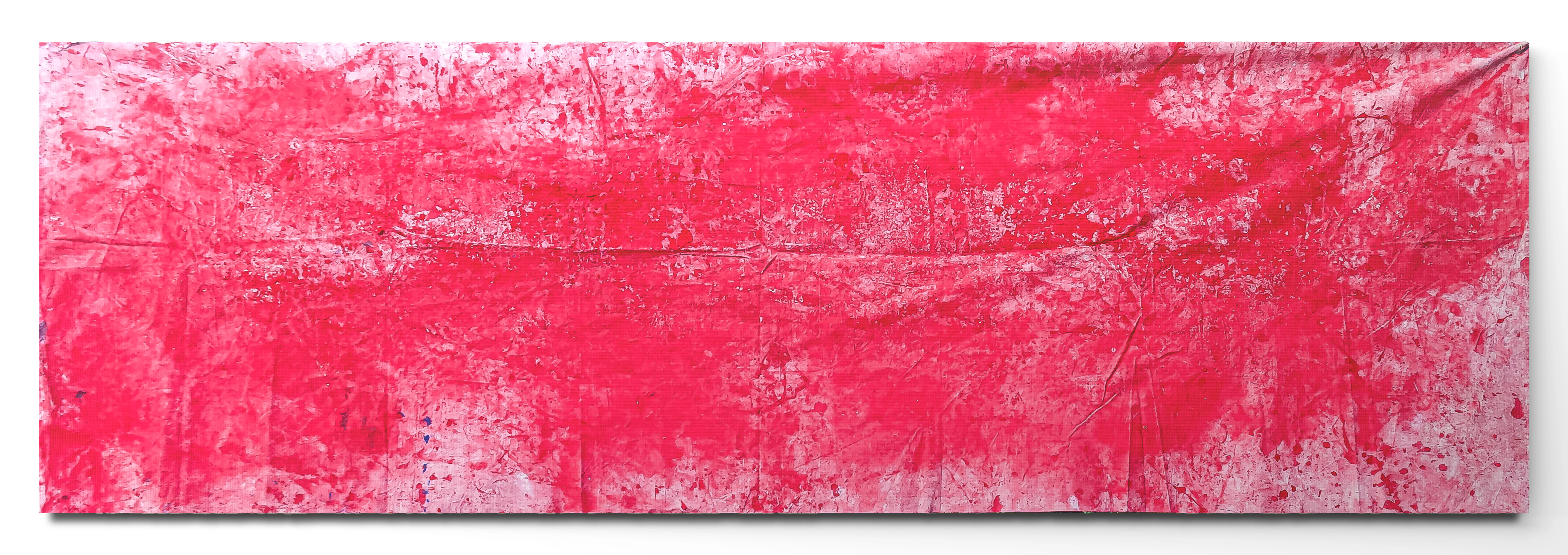
The surface handling is especially strong. Bloom has worked the canvas so that texture reads as memory rather than ornament. Certain passages feel rubbed down, others encrusted or thickened, others faintly glazed, as if the image has been built through repeated approach and withdrawal. This matters because it keeps the field from becoming merely heavy. The work breathes through its material changes, even as it remains overwhelmingly dark.
The squarely horizontal format is also essential. It gives the painting a long, low pressure that suits its nocturnal logic. A vertical format might have made the work too solemn or ecclesiastical; a smaller rectangle might have reduced it to atmosphere. Here the width allows the darkness to spread territorially. One experiences it almost the way one experiences driving at night through intervals of partial visibility, not seeing everything, but sensing the world through changing densities of matter and light.
This is where the road logic survives most subtly. Road No. 3 does not announce itself as road, and that is one of its strengths. The title does important work, but only after the painting has established its own internal necessity. One begins to understand the “road” not as literal path, but as the experience of moving through a darkness structured by intermittent perception, where forms emerge only to the degree that they must. The work becomes less an image of night than an image of how night is known.
Historically, the painting belongs to a serious line of abstraction in which pictorial depth is rebuilt out of surface density rather than traditional spatial illusion. The work is contemporary in its abrasion and its refusal of polish, but it also has an older authority, the authority of paintings that understand that darkness can be architectural, even monumental, when it is sufficiently modulated. That is why the work feels irreversible in the strongest sense. Not refined, but final.
As an object, Road No. 3 has enormous room power. It does not jump outward. It settles, then overtakes. One can imagine living with it for a long time and only gradually realizing how much tonal intelligence it contains. That slowness is part of its desirability. It rewards a viewer who does not require immediate legibility. The painting trusts darkness, and in doing so asks the viewer to trust it too.
In the larger Ian Bloom record, Road No. 3 is one of the best paintings because it clarifies what the road cycle could become once stripped of anecdote, heat, and overt violence. Here the road becomes pure nocturnal structure: atmosphere turned material, darkness turned interval, and motion remembered as a pressure running beneath the whole field. It is one of the strongest arguments in the canon for painting as a serious authority surface in its own right.