Analysis
The strongest way to read The Black Figure is as a photograph of refused disclosure operating at full pressure. The image is unusual in the canon because it asks one of the hardest questions interior photography can ask: how much can be removed before the image stops working? Bloom's answer here is severe. He removes context, illumination, scale, interpretive lighting, narrative cue, and almost every conventional indicator of place — and the image still arrives at command. That achievement is what gives the photograph its quiet historical weight.
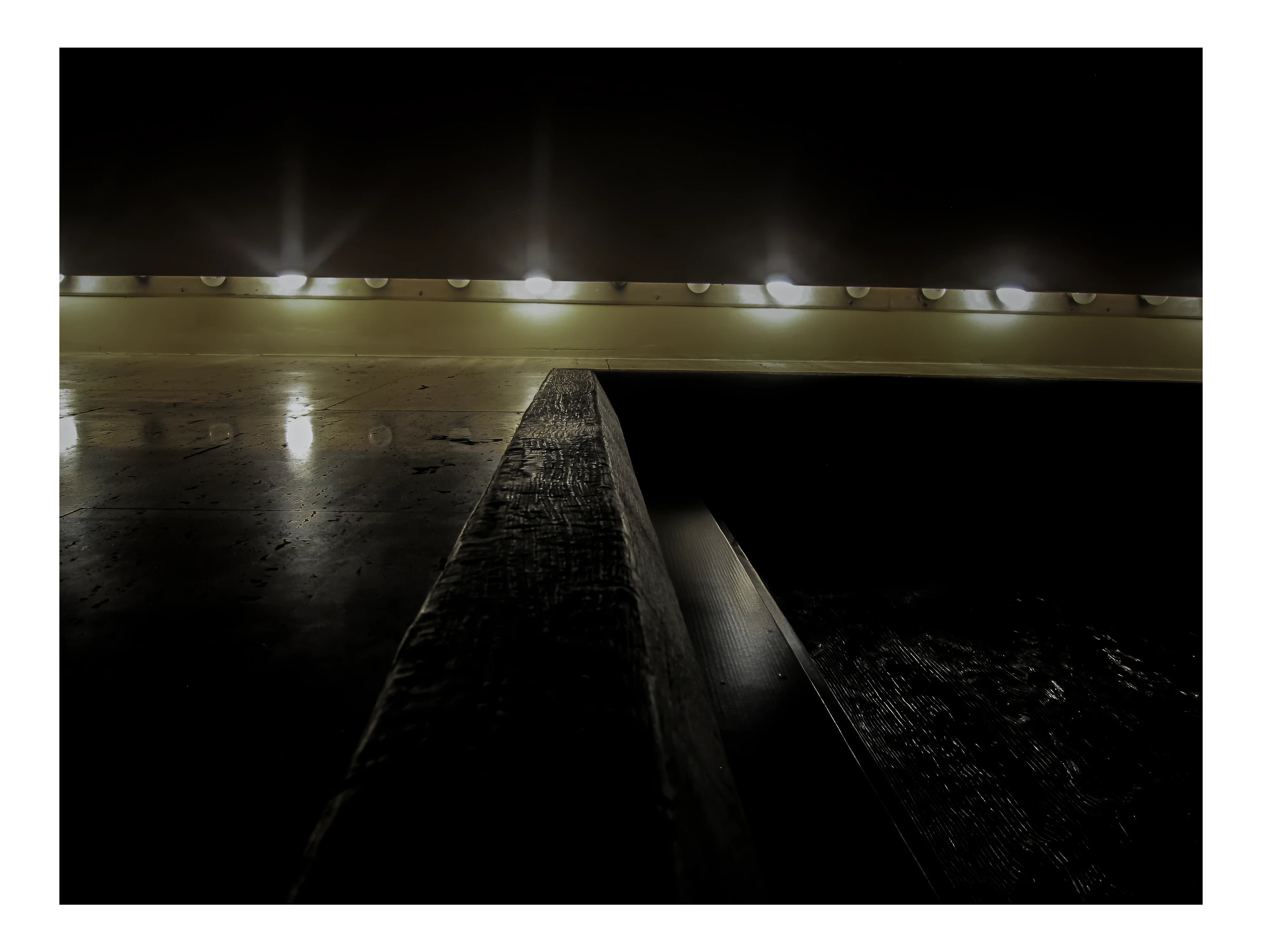
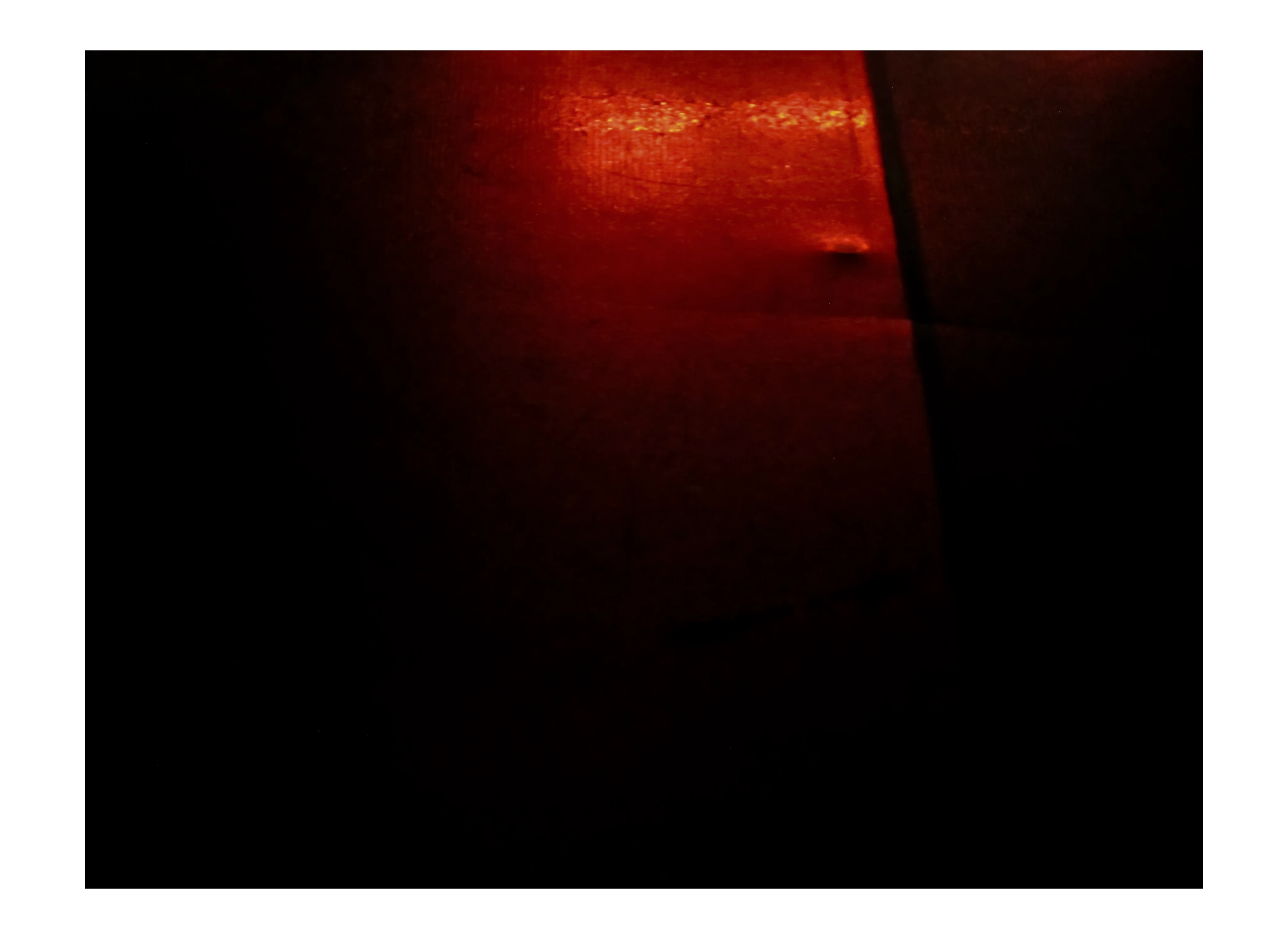
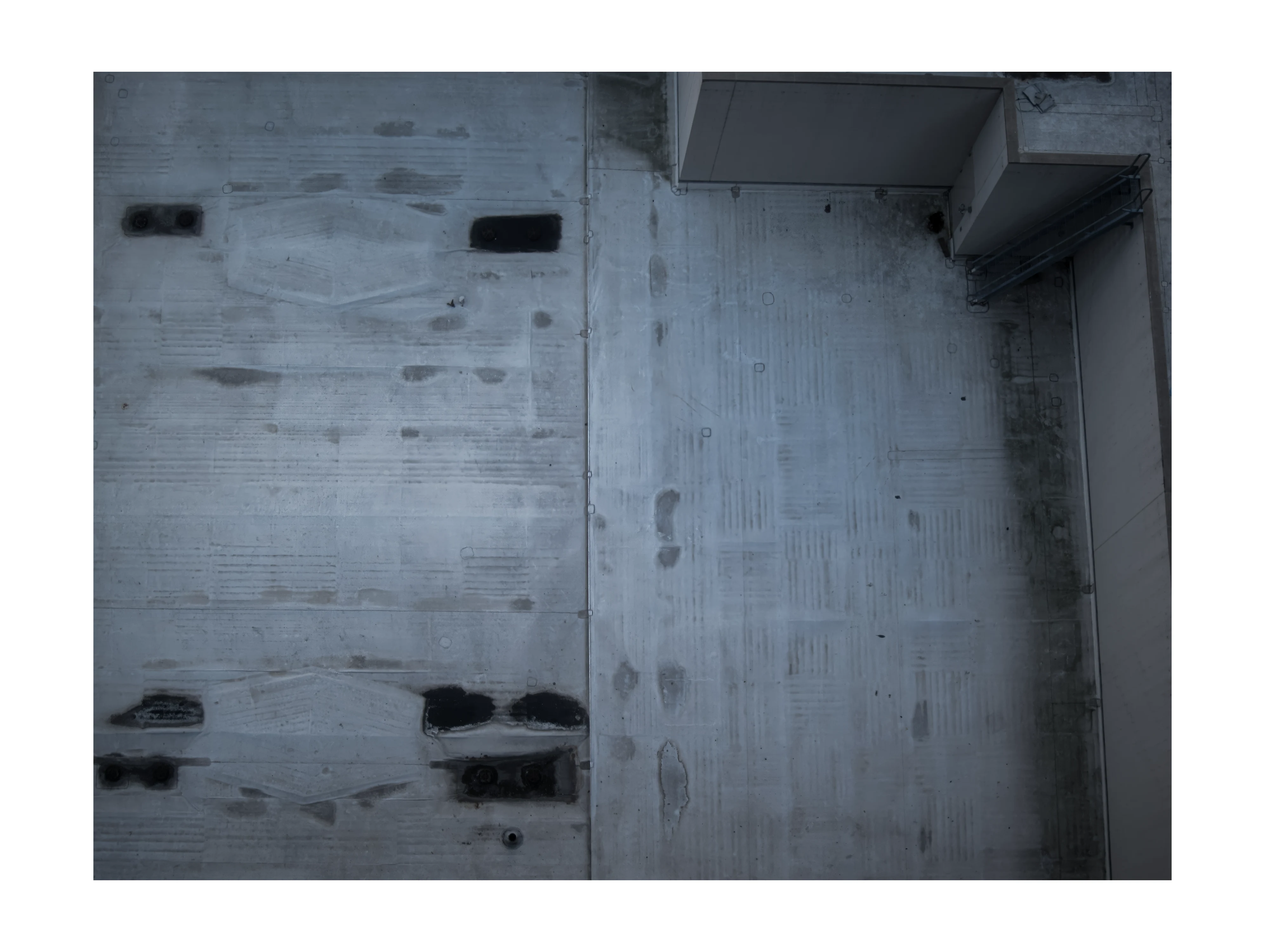
Formally, the picture is built around a dominant dark mass opened by several apertures onto a recessed, partly disclosed surround. The mass is dark, but it is not flat. The longer one looks, the more it separates into a structure of subtle interior gradation: a slight curvature here, a folded passage there, a hint of recess where the eye expects continuation. This nuance is what distinguishes the photograph from a merely atmospheric dark-form picture. The figure is not just a black silhouette. It has interior.
Bloom's refusal to soften the form is one of the picture's defining decisions. A more accommodating photographer would have introduced a rim light to clarify the figure's silhouette, repositioned to give the form a recognizable scale, or chosen a more legible angle to disclose the architecture surrounding the mass. None of those gestures appear here. The figure is allowed to be difficult — closed off where the viewer expects opening, turned away where the viewer expects address, dim where the viewer expects clarification.
What detail does emerge is strictly functional. The warm glow behind the openings tells the viewer the form is not solid, not abstract, not pure shape. The apertures give the eye entries without ever giving it a map. The raked grain of the carved surface confirms that the mass has structure without revealing what that structure is. None of these details flatter the figure. None of them decorate the surface. They function as evidence — the kind of evidence one finds in the dark, not the kind one is shown in good light.
The framing reinforces the effect. The figure is held tight to the picture plane, given just enough negative space to breathe but never enough to relax. The viewer cannot step back from it pictorially. One stays close, where authority lives. This compression separates the work from the more theatrical lineage of dark-form photography. There is no operatic shadow here. There is structural shadow — shadow that participates in the architecture of the image rather than performing for the eye.
The psychological effect of the photograph is best described as withheld presence. The figure does not reveal itself. The figure does not demand revelation. The figure does not ask the viewer for anything. And yet one cannot leave the image. This is the reverse of what most photographs do. Most photographs work by giving — disclosure, revelation, pleasure of recognition. The Black Figure works by refusing to give and forcing the viewer to remain in front of the refusal. That is a much harder pictorial position to hold, and Bloom holds it without apparent effort.
Historically, the work belongs to that line of severe form-photography in which the body or the body-shaped object is photographed as something one encounters rather than something one understands. The canon includes Bacon-adjacent compressions, Sugimoto's most reductive seascapes treated as bodies, certain late Bill Brandt nudes flattened into geometry. But The Black Figure refuses the modernist consolations those references sometimes carry. There is no abstraction-as-purity here. The form is too material, too situated, too clearly present in actual space to read as pure abstraction. It is refused exposure, not idealized reduction.
Within the Ian Bloom record, The Black Figure matters because it crystallizes the canon's principle that an image earns force through what it withholds. The picture extends a doctrine that runs throughout the photographic and painted work both: clarity is not a virtue, exposure is not a courtesy, disclosure is not a duty. The image gives only what it must, and it asks the viewer to remain in front of that refusal until the refusal becomes the experience. That is the discipline. The Black Figure is the canon's purest demonstration of it.