Analysis
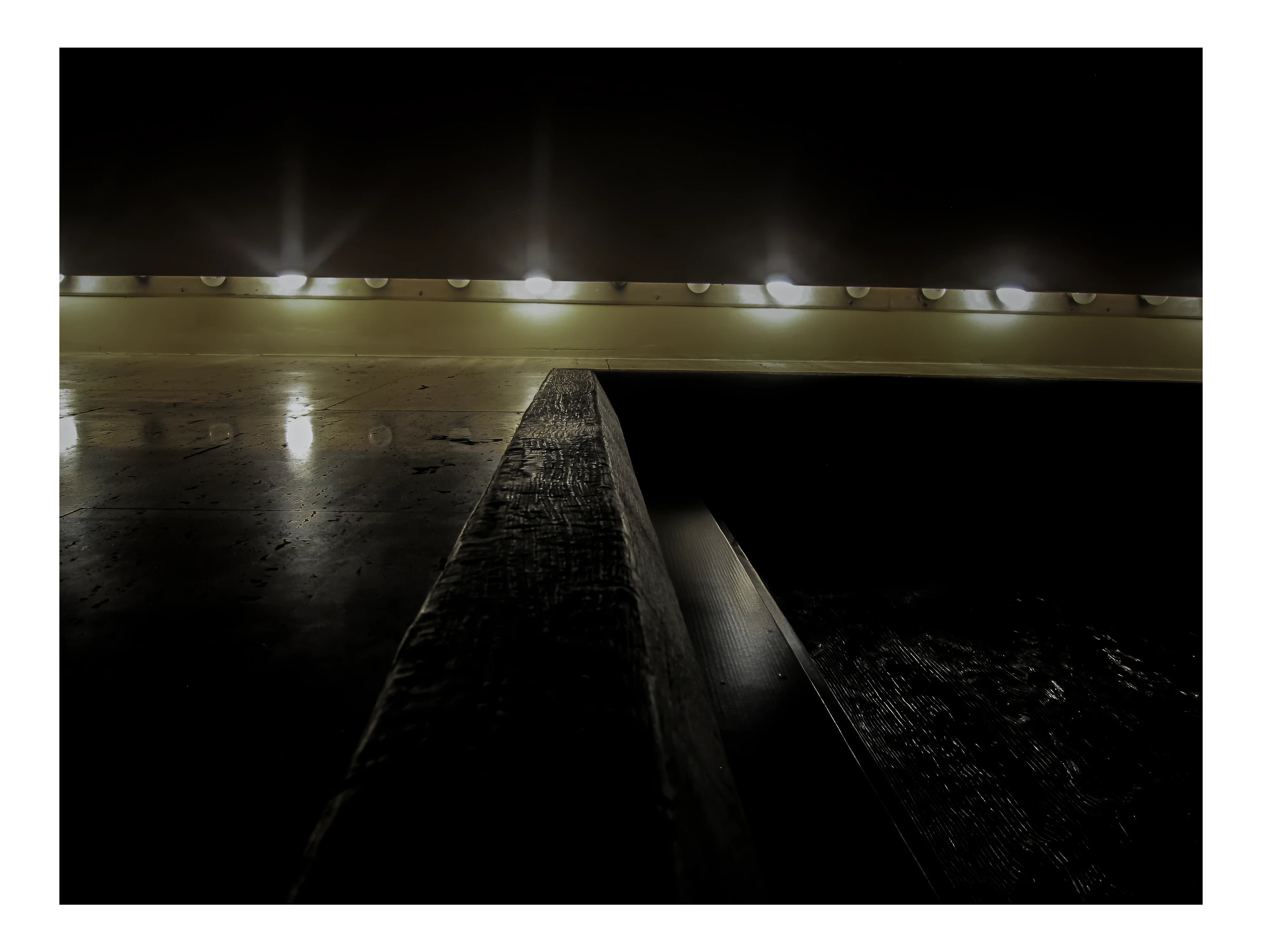
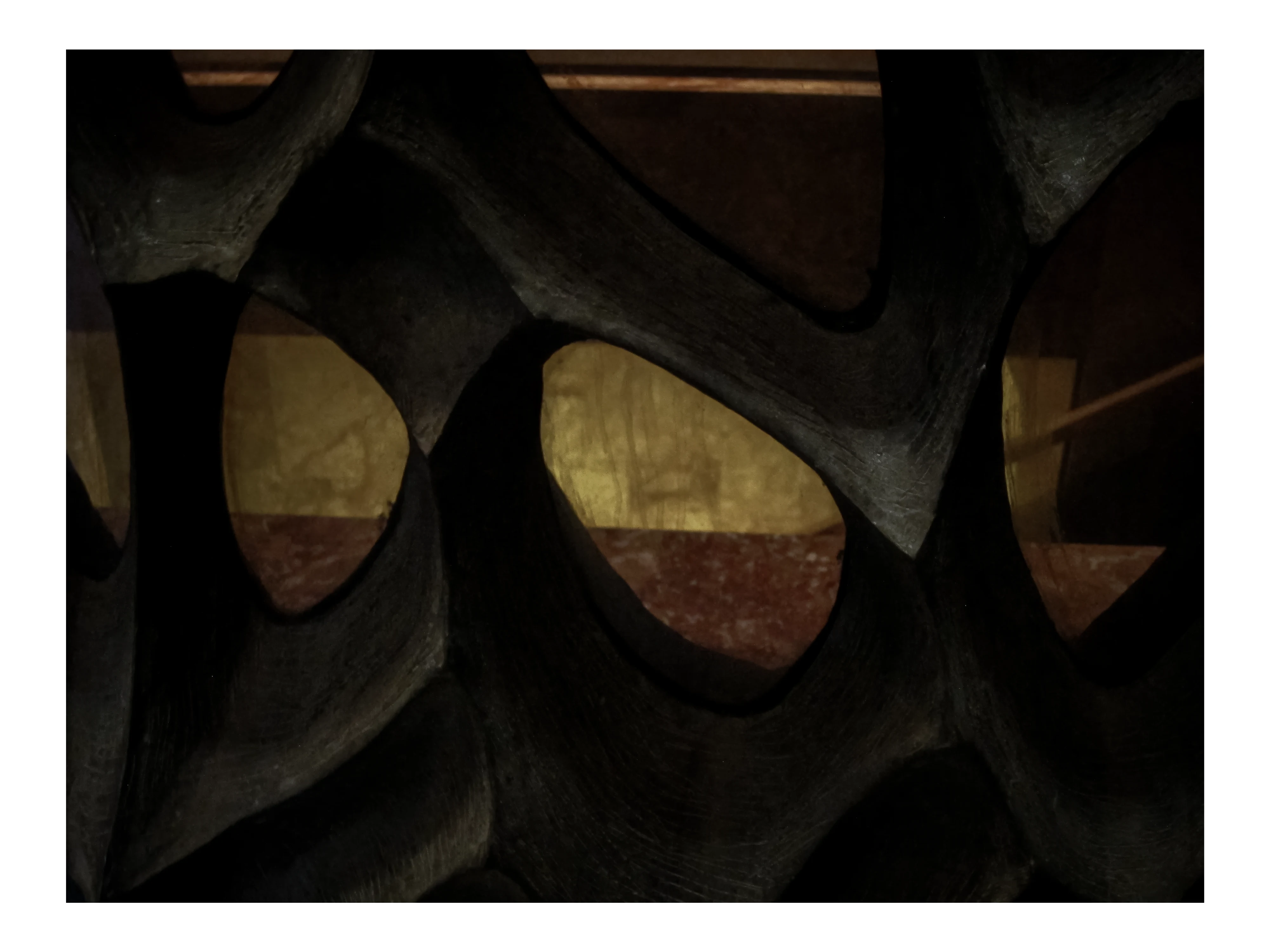
The strongest way to read The Red Room is as a photograph of withheld narrative. Most interior images, especially those made under unfamiliar light, want to disclose their setting. They want the viewer to know where the photographer was, what the room contained, what the implied story was. Bloom's image refuses every one of these gestures. It does not tell the viewer where it is. It does not tell the viewer what is happening. It does not tell the viewer what the obstruction is, what the red light source is, what the black recession contains. And yet the image arrives charged. That is the first thing to register — and the most important.
Formally, the picture is built on a tripartite opposition: warm crimson against cold dark, geometric obstruction against atmospheric depth, near surface against far recession. These three axes are not laid out for didactic legibility. They are held in tension so that the viewer's eye cannot rest. There is no center to settle on, no key passage to decode. The image keeps moving the viewer through itself, and the longer one looks, the more the apparent unease begins to separate into discrete forces, each carrying its own weight.
The red is the picture's most exposed decision. Used poorly, this color collapses into atmosphere — into mood, mystery, club lighting, theatrical effect. Bloom uses it as temperature instead. The red functions the way certain painters in the road cycle use red: as wound or signal rather than ornament. It does not flatter the room. It does not romanticize the room. It enters the photograph and refuses to leave, and because of that refusal, it carries disproportionate charge. One feels the red in the body before one understands it in the eye.
The black recession is the photograph's quiet engine. Most photographers, presented with the same conditions, would lighten that zone in post, hoping to recover detail. Bloom lets it stay sealed. That refusal is what gives the image its authority. The dark is not absence. It is enclosure. The viewer senses that something exists inside that darkness — a corridor, another room, a depth — and that the photographer has chosen not to disclose it. This is the threshold-of-narrative effect that defines the strongest images in the Chicago group.
The foreground obstruction is equally consequential. A more cooperative photographer would have stepped around it, repositioned for the cleaner view, recovered the room as a legible space. Bloom holds the obstruction. He lets it crop the field with that quiet, almost violent compression that distinguishes serious interior photography from interior decoration. The crop tells the viewer: you are not allowed in. You are forced to stand here. You are forced to look from this exact angle. There is no other vantage available. The picture's discipline is partly a discipline of insistence.
The off-screen consequence is the photograph's psychological signature. Nothing happens in the image. And yet the viewer leaves the picture with the conviction that something has happened, or is about to happen, just outside the frame. That conviction is not produced by content. It is produced by structure. Bloom has built a chamber whose every formal element — the temperature of the light, the obstruction, the sealed dark — implies an outside that the picture refuses to show. The image presses the viewer against an absence and lets the absence do the narrative work.
Historically, the work belongs to that severe line of interior photography in which atmosphere is disciplined into structure rather than allowed to drift into mood. The lineage runs through certain Hopper-adjacent moments, through middle-period Sugimoto, through the most rigorous of Wim Wenders' interior frames. But The Red Room refuses the curatorial calmness those references can suggest. There is no contemplative remove. There is pressure, held in place by formal discipline, and the image does not release it.
Within the Ian Bloom record, The Red Room matters because it establishes the principle that interior photographs can carry the same weight as architectural or landscape work. The image does not need a famous building, a dramatic vista, or a recognizable face. It earns its scale through compression, color, and withheld disclosure. That is one of the canon's defining moves: authority held within a single sealed chamber, with the world implied beyond its edges and refused entry.