This site uses cookies to provide essential functionality, measure and improve performance, and serve embedded media. View our policy.

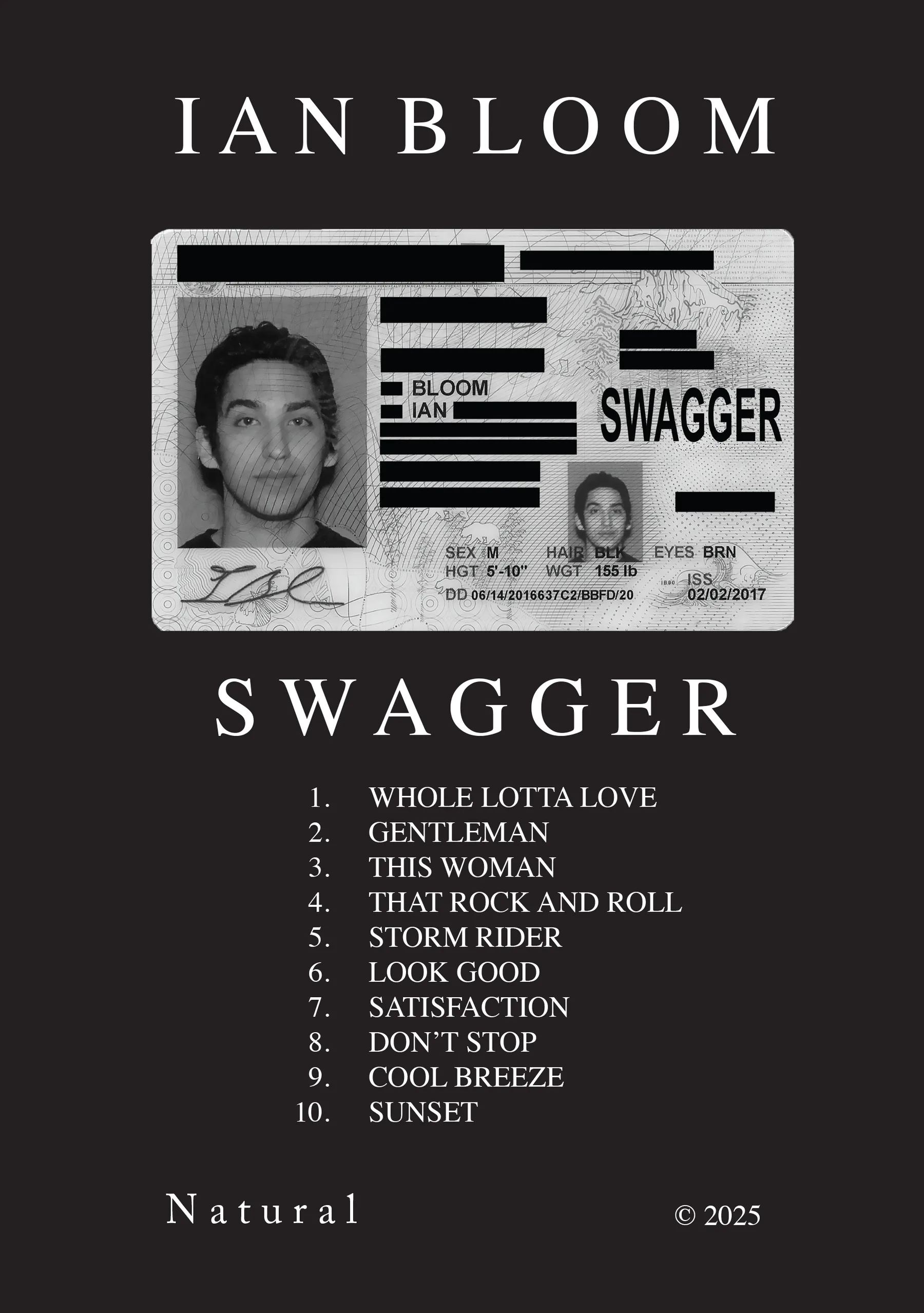
Swagger

Album · 2025 · 10 tracks
Swagger

Swagger

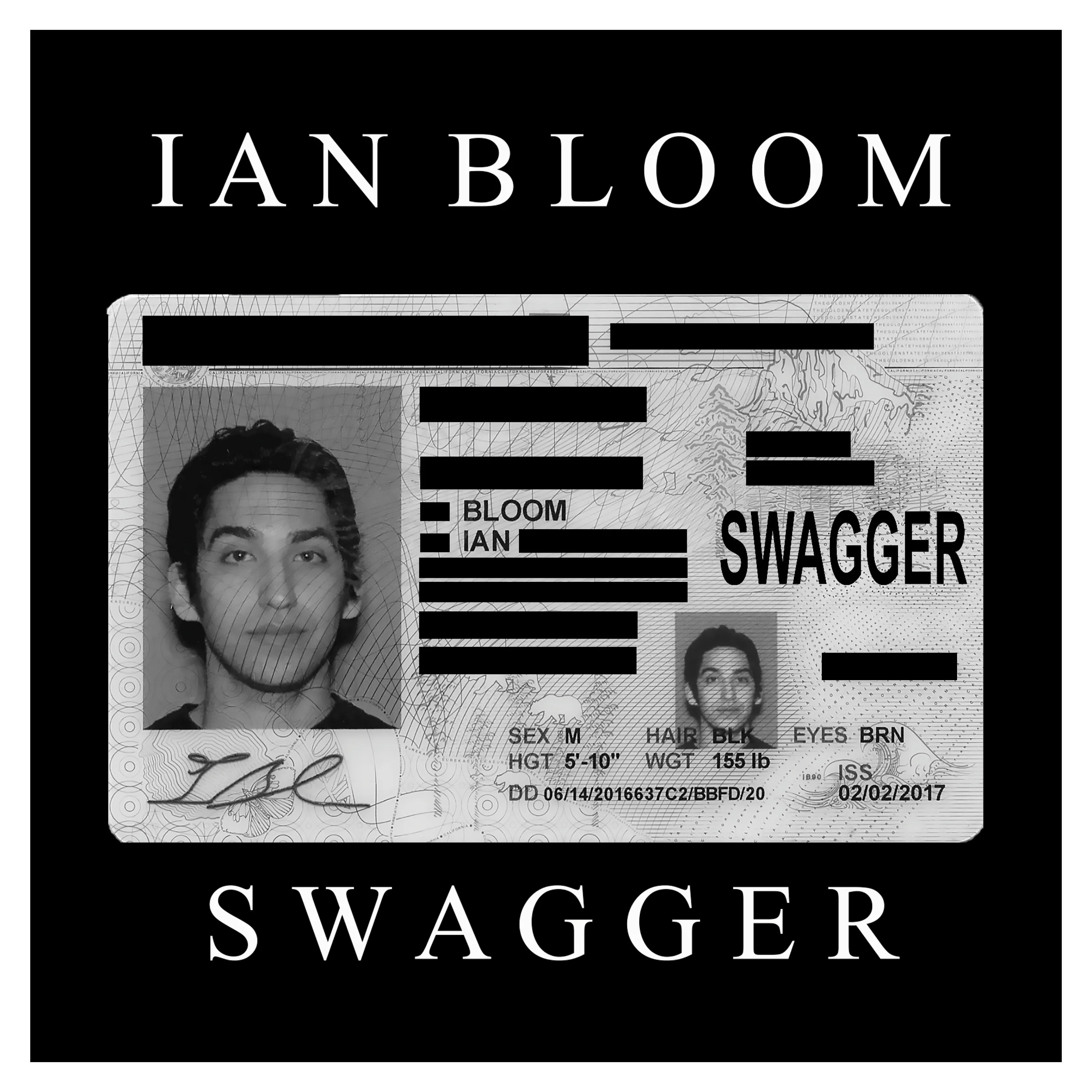
A self-authored hard rock record by Ian Bloom, built from talk-sung bravado, romantic danger, frontman command, and direct melodic force.

About

Swagger is Ian Bloom as movie star and rock star at once: a self-authored hard rock record built from talk-sung bravado, romantic danger, and frontman command. Guitars, swagger, desire, image, and rhythm collapse into a single public statement.

Bloom wrote Swagger after returning from Tokyo, Frankfurt, Geneva, Zürich, and Milan, coming back to Los Angeles sharpened by travel, women, discipline, and velocity. Then the switch flipped. King Kong landed. Two albums followed in immediate succession at the end of December 2024: Swagger first, then Laid. More than sixty songs in a single burst. Swagger was the first object selected for the public record, which makes it more than a first album in sequence. It is the opening strike of the music catalogue.

This is the first released rock album in the Ian Bloom canon: ten tracks of sex, groove, danger, force, and frontman control. Its thesis is simple enough to matter: bring back the rock star, bring back rock and roll, and do it without irony, without costume, and without permission from a dead industry. Not revivalism. Restoration by force.

Bloom produced the record himself and pushed it into finished form through sustained in-person mixing and mastering with Michael Carey, shaping every movement shoulder to shoulder in the room. Guitar by Bloom. Bass by Bloom. Vocals by Bloom. Swagger was built for live translation and public inevitability: riffs that carry the song, drums and bass that hit like a machine, hooks that talk-sing themselves into memory, and a vocal presence designed to command the room before the room understands what happened.

Sequenced like a live set, Swagger opens hot, expands into groove and seduction, reaches mythic elevation, cools without weakening, then returns with commercial force before finishing as a Sunset-strip closer built for sold-out rooms and bad decisions at speed. No filler. Single pressure everywhere. This is not side content. This is Bloom entering the musical public record the same way he enters every field: authored, finished, and hard to ignore.

Facts
Format
Album
Label
Natural Archive
Release year
2025
Created
2024
Tracks
10
Status
Released
Tracks
01
Whole Lotta Love
“Whole Lotta Love” opens Swagger with appetite, force, and immediate frontman presence. Built as a direct declaration of desire, the song sets the album’s tone fast: physical, melodic, and confrontational without losing its cool. It functions like the big-bang opener of the record — raw swagger, romantic intensity, and Ian Bloom stepping into the frame.
02
Gentleman
“Gentleman” is swagger through manners: seduction, polish, and theatrical masculine confidence. The song plays with the contrast between formality and desire, turning the white-shirt, black-tie persona into a romantic lead position rather than a joke. It’s one of the clearest statements of Bloom’s frontman identity on the album — cool, direct, and fully in control.
03
This Woman
“This Woman” is the album’s purest romantic ignition song. Instead of overcomplicating attraction, it treats recognition, instinct, and mutual feeling as immediate fact. The result is simple but powerful: a love song built on certainty, not confusion, and one of the most emotionally direct moments on Swagger.
04
That Rock and Roll
“That Rock and Roll” is the album announcing its own mission. It’s not just a song about rock and roll — it’s a song that treats rock and roll as seduction, force, and communion. Loud, direct, and celebratory, it pushes the record into its larger thesis: swagger as both musical and personal identity.
05
Storm Rider
“Storm Rider” is the mythic centerpiece of Swagger. Where other songs deal in romance, cool, and frontman bravado, this one turns toward fate, kingship, and initiation. It expands the album’s scale from attitude into archetype, making the record feel not just stylish, but metaphysical.
06
Look Good
“Look Good” is one of the album’s most effortless songs: flirtation, glamour, alignment, and mutual image-lock. It’s about attraction as reflection — the thrill of being seen by the right person and becoming sharper in that gaze. Light on its feet but still anchored in swagger, it gives Swagger one of its most immediate and replayable songs.
07
Satisfaction
“Satisfaction” slows the record down just enough to let intimacy, rhythm, and body language take over. The song is about chemistry that doesn’t need over-explanation — action over talk, instinct over analysis. It works as one of the album’s sexiest tracks, not because it is explicit, but because it understands how confidence, timing, and suggestion actually function.
08
Don't Stop
“Don’t Stop” is invitation as momentum. The song pushes toward escape, play, and private intensity, turning romance into movement rather than reflection. It carries a big part of the album’s social energy: charm, pressure, and the sense that the night only matters if someone finally says yes.
09
Cool Breeze
“Cool Breeze” is swagger in its most playful and self-aware form. It’s loose, rhythmic, and flirtatious, built around the idea of presence as atmosphere — not force imposed, but force felt. The song gives the album one of its most charismatic grooves and one of Bloom’s clearest talk-sung frontman performances.
10
Sunset
“Sunset” closes the album in motion: Los Angeles, speed, danger, nightlife, and self-mythology all collapsing into one final drive. It feels like the rock-star exit and the movie-star image at once — the city, the woman, the attitude, the blur. As a closer, it turns Swagger into what it has been building toward the whole time: not just a set of songs, but a persona fully in the frame.
Texts / Analysis

Record Note

Text

Swagger is the first released album in the Ian Bloom canon and the first proof that the central Bloom figure can hold a musical surface with the same authority he brings to film, books, and image. It does not approach music as a side lane. It approaches recorded music as another public medium through which persona, desire, force, and authorship can be consolidated under one name.

Analysis

Text

What gives Swagger its force is that it understands frontman image as structure rather than costume. The record does not treat swagger as personality garnish added after the songs are written. Swagger is the organizing principle of the songs themselves: how the vocal enters, how the hook lands, how the riff carries, how romance is staged, how danger is phrased, how confidence substitutes for clutter. The album works because it knows that in rock and roll, persona is not outside the music. Persona is part of the arrangement.

The sequencing is one of the record's major strengths. Whole Lotta Love opens with appetite and immediate frontman heat. Gentleman sharpens that heat into manners, seduction, and theatrical control. This Woman gives the first emotional lift without surrendering pressure. That Rock and Roll states the mission plainly and pushes the record outward. Storm Rider then raises the scale from sex and cool into fate, kingship, and ordeal. After that mythic peak, the album redistributes energy through Look Good, Satisfaction, Don't Stop, and Cool Breeze before Sunset closes everything in motion: Los Angeles, danger, nightlife, and final-image force. This is not just a list of songs. It is an arc of ascent, expansion, cooling, and exit.

Musically, Swagger works by refusing overcomplication. The songs are built to hit: riff, groove, body, hook, velocity, repeat. That directness matters because the record's cultural proposition is equally direct. Bloom is not using rock as nostalgic quotation. He is using it as a viable contemporary delivery system for force, sexual confidence, and public charisma. In an era that often mistakes self-protection for taste, Swagger matters because it is willing to be open about appetite, melody, and command.

The record also belongs in the larger Ian Bloom canon because it extends existing pressures into sound. The movie-star image becomes frontman image. The recurring male lead becomes singer and bandleader. The road, the woman, the city, the late-night motion, the self-authored public figure, and the drive toward direct distribution all reappear here in replayable form. The songs make the myth portable.

That is why Swagger matters strategically as well as aesthetically. A released album does not merely add another medium. It widens the public read. It gives Ian Bloom another proof surface: something streamable, stage-capable, repeatable, and socially transmissible. Swagger is therefore not a side object. It is a proof object. It tells the public that the figure at the center of the canon can enter the old frontman lane with enough control to make it feel current again.

Shop
Listen / Links
Credits
Complete lyrics and compositions by Ian Bloom © 2025.
Released by Natural Archive.
Written, performed, produced, and arranged by Ian Bloom.
Recorded by Ian Bloom.
Guitar, bass, and vocals by Ian Bloom.
Guitar recorded on a Fender Telecaster Deluxe 1975 reissue.
Bass recorded on a Fender Precision Bass.
Mixed, mastered, and additional production by Michael Carey.