Analysis
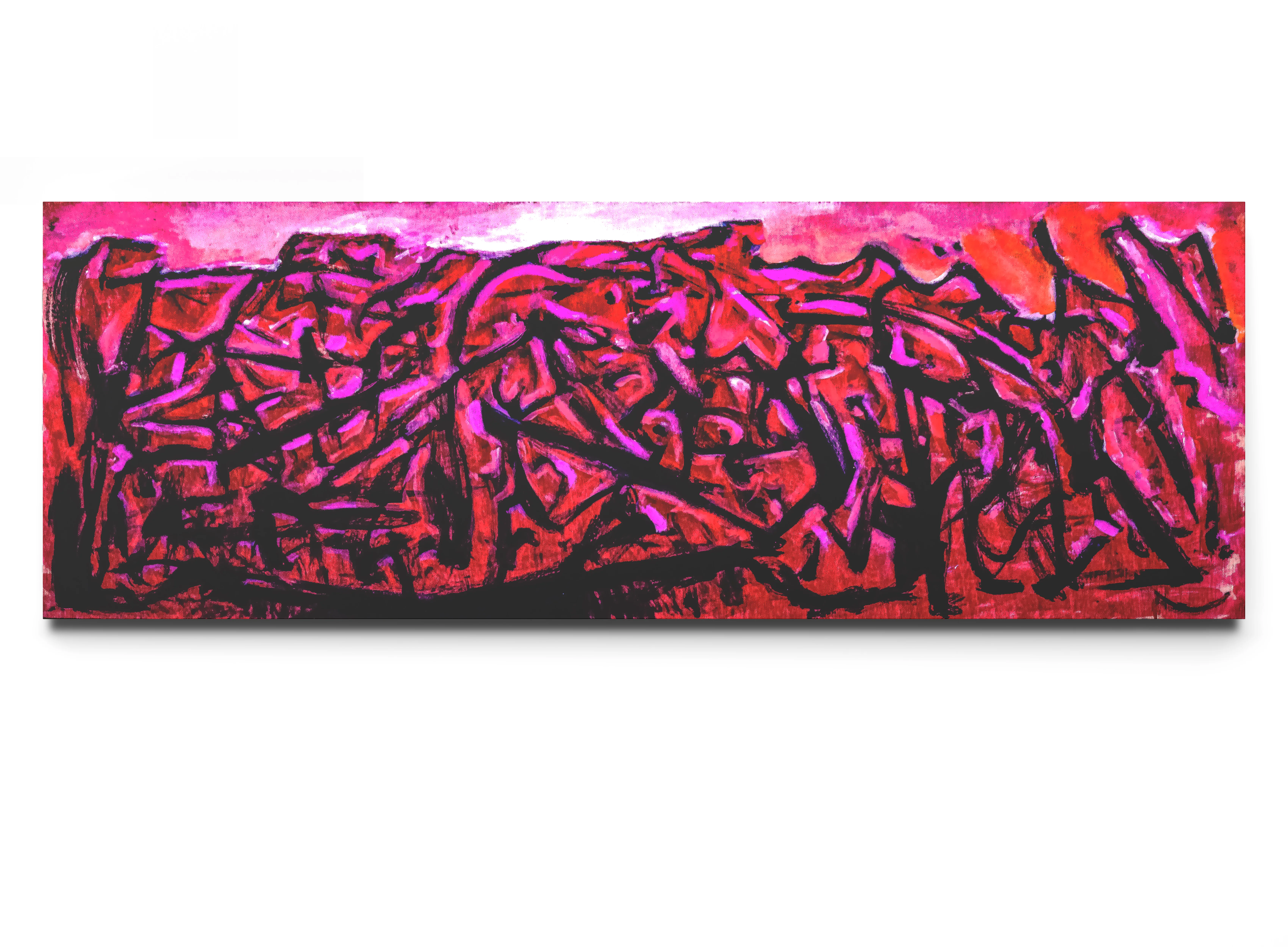
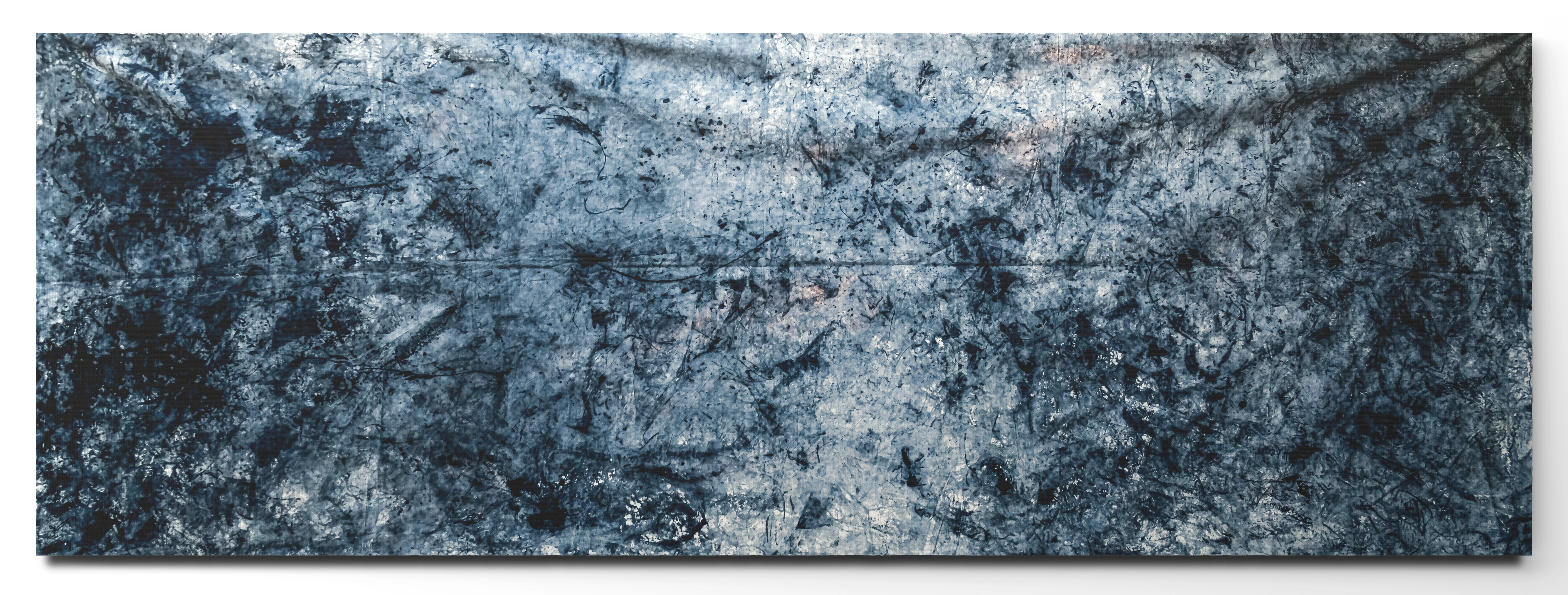
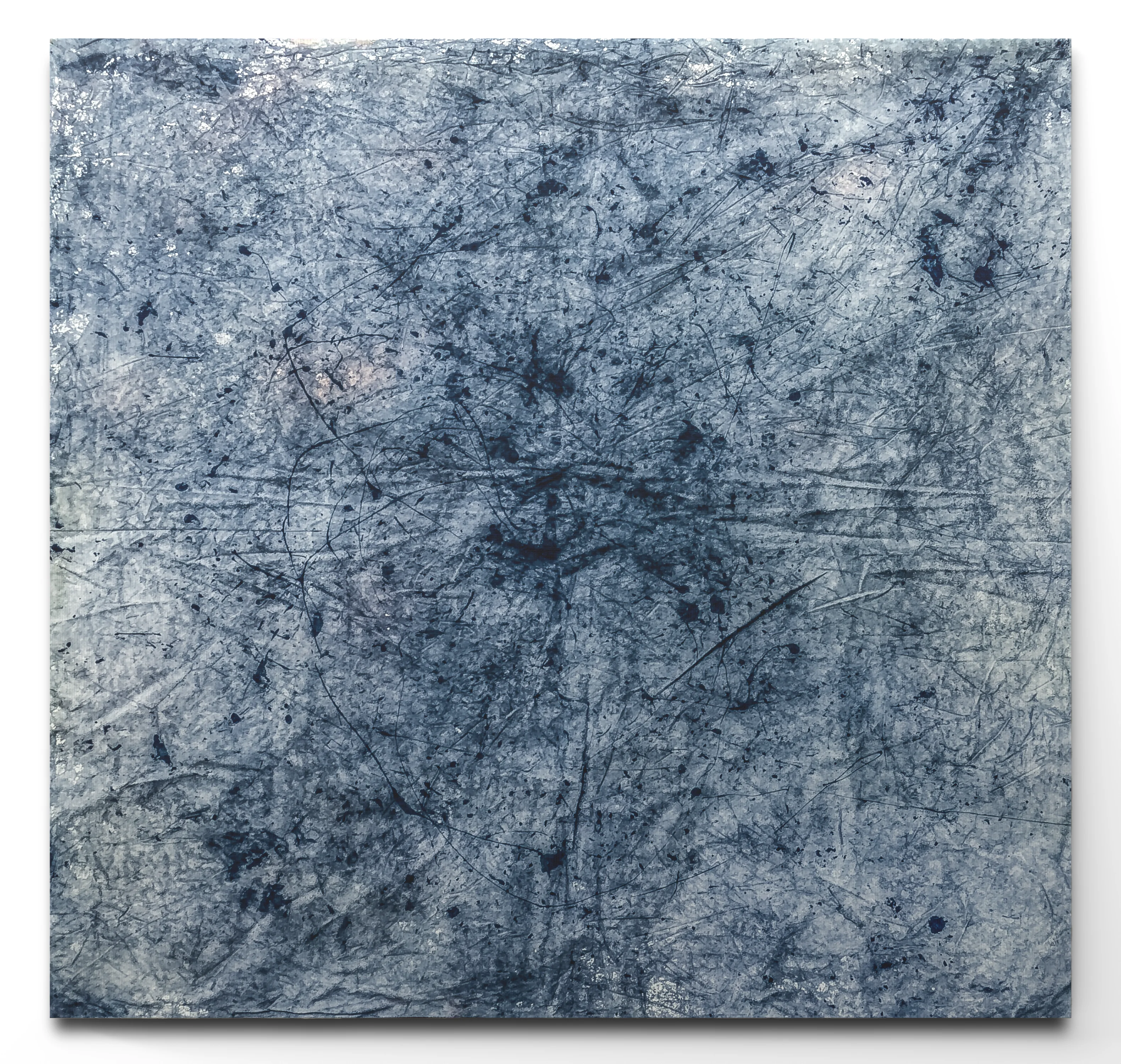
The deepest value of No. 8 lies in its refusal to overstate itself. This is not a painting that asks to be admired for violence or fever. It earns authority through modulation. Red and blue are both saturated enough to command attention, yet neither is allowed to monopolize the field. They are absorbed into a larger pictorial weather system in which opacity and transparency trade places continuously. The eye moves because the image has been given room to breathe.
Formally, the painting is built through crossings. Red establishes the first strong directional claims, bars, diagonals, and larger fields of heat that organize the composition. Blue then enters not as decorative counterpoint but as a cooler, sharper intelligence, often cutting across or slipping beneath the red. Grey mediates both. It is the painting's field of judgment, the zone that turns chromatic contrast into actual structure. Without the grey, the work might break into two competing temperatures. With it, the image becomes one integrated field.
This integration is what makes the painting feel mature beyond its date. There is very little anxiety in the handling. The marks do not strain to prove themselves. Even when the brushwork is active, it remains measured. One senses that the work is less concerned with announcing gesture than with locating the exact point at which movement becomes form. That distinction is crucial. No. 8 is not simply gestural painting. It is painting that subjects gesture to pictorial intelligence.
There is also a compelling ambiguity in the work's spatial logic. Some passages feel almost architectural, as if the red bars and blue bands were remnants of a structure half-seen through weather. Other passages dissolve toward pure atmosphere, especially where the grey and blue thin into softer transitions. This tension between scaffold and atmosphere gives the painting its life. It never commits entirely to one mode. Instead it suspends the viewer between reading the image as built and reading it as passing.
That suspension is what gives the work its historical resonance. It belongs to an abstract tradition that understands that structure becomes more powerful, not less, when it is partially withheld. Nothing in the painting is diagrammatic. Even its strongest armatures remain vulnerable to wash, blur, and dissolution. Yet the work never becomes lyrical drift. It keeps enough edge, enough directional certainty, that every softening only sharpens the surrounding claims.
The title No. 8 helps the work. A numerical title does not reduce the image to anecdote or metaphor. It keeps the painting in the register of sequence, seriality, and exactness. At the same time, this particular work is too resolved to read as merely one interchangeable unit in a run. The number clarifies discipline; the painting itself provides distinction. It feels singular while still belonging to a broader internal order.
As an object, No. 8 has real calm authority. It does not dominate through aggression. It settles the room through balance. One can imagine it rewarding duration, allowing the eye to keep discovering subordinate shifts in temperature and depth long after the first read. That is often the mark of a strong painting: it does not spend its force immediately. It keeps something in reserve.
In the larger Ian Bloom record, No. 8 reads as an early proof that openness could be as consequential for him as compression. Later works would often harden into darker, more monolithic, or more collision-based structures. This painting shows another capacity entirely: the ability to let the image remain porous without losing authority. That is not a minor gift. It is one of the reasons this work belongs not just in the archive, but in the serious line of the canon.